THE VISUAL GRAMMAR OF WILDERNESS
part 2
"The Visual Grammar of Wilderness" is a three-part project that explores the colonial concept of wilderness and the role of photography as a tool to represent and frame nature. This second part speculates about a future in which nature in human habitats is valued as much as nature in a remote "wilderness."
Based on artistic research with found photographs (in part 1), I reconstructed the visual grammar of wilderness photography. Those image styles and media stereotypes became the guideline for my own image-making. I applied the visual grammar of wilderness to take photographs of natural scenes, but all photographs were taken in places that are not associated with "wilderness": in large European and Asian cities. Then I used these photographs to create fictional wild landscapes.
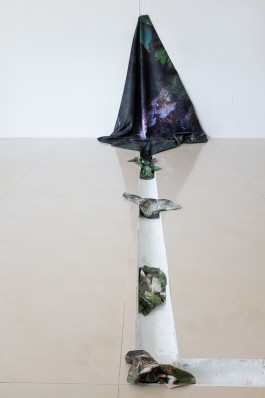
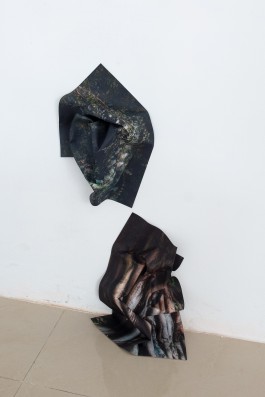
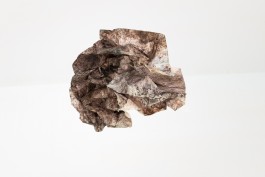
The installation work "A Wild Space" expands the medium of photography towards sculpture. With a sculptural approach to photography and the transformation of the motif and surface, I intend to create fictional environments and a space of sensual experience. All sculptural forms within the "wild space" imitate the forms of nature and refer to the visual stereotypes of wilderness photography, but they have their roots in places with high population density.
What is nature?
How does the wild look and feel?
Where do we think we come close to nature?